
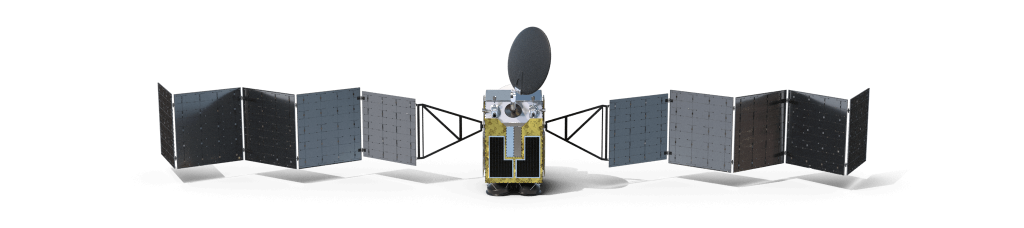
Microsatellites
Microsatellites are taking over the world by leaps and bounds. Just think of global satellite internet: anyone who follows tech news will remember Elon Musk and his space internet project.
Thanks to the availability of parts and open designs and code, a microsatellite can be assembled almost at home. This satellite format is called a CubeSat (microsatellite, nanosatellite) – it is a 10x10x10 cm cube that weighs up to 1 kg. They can also be combined in stacks of 3-9 units.
Microsatellite tests in Ukraine
It is not possible to launch a satellite into space from the territory of Ukraine, but it is possible to test it in conditions as close to space as possible. The Strato team offers a service that launches microsatellites to the stratosphere and back.
At an altitude of 30-40 km the temperature ranges from -56 to -70 degrees Celsius, the pressure is hundreds of times lower than at sea level, and the atmosphere is almost completely absent (near vacuum). This creates the conditions needed to test all CubeSat systems.
Where and how do launches take place?
We carry out launches in Ukraine, in places as far away from populated areas and air routes as possible. The stratostat can rise to altitudes of 30 to 40 km. The flight takes one and a half to two hours.
We work according to international standards for safe launches. We never pollute the atmosphere and always find our stratostats after landing. In the future, we are going to obtain a license to certify microsatellites.

